National Symbols - GOV.KY

Our National Symbols
The national symbols of the Cayman Islands showcase what is unique about the Islands and its people. They inspire a sense of pride in the culture and heritage of the country.
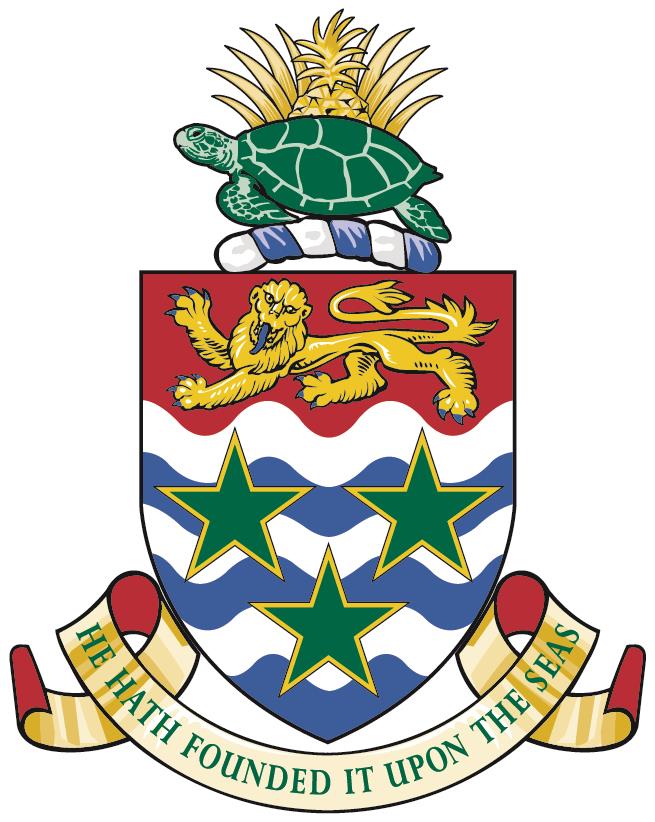
The Cayman Islands coat of arms consists of a shield, a crested helm and the motto. Three green stars representing the Islands are set in the lower two-thirds of the shield. The stars rest on blue and white wavy bands representing the sea. In the top third of the shield, against a red background, is a gold lion "passant guardant" (walking with the further forepaw raised and the body seen from the side), representing Great Britain.
Above the shield is a green turtle on a coil of rope. Behind the turtle is a gold pineapple. The turtle represents Cayman's seafaring history and the rope represents its traditional thatch-rope industry. The pineapple shows our ties with Jamaica. The Islands' motto, He hath founded it upon the seas, is printed at the bottom of the shield. This verse from Psalms 24 acknowledges Cayman's Christian heritage.
The proposal for a coat of arms was approved by the Legislative Assembly in 1957, and public input was sought on its design. The Royal Warrant assigning "Armorial Ensigns for the Cayman Islands" was approved by Her Majesty's command on 14 May 1958.
Written permission from the Cabinet Office is required for any non-governmental use of the Coat of Arms.
More:
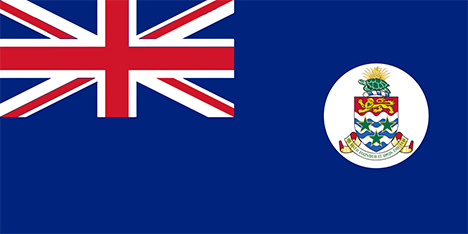
The Cayman Islands Flag, the official ensign, was adopted in 1959, shortly after the Coat of Arms was adopted. There are two versions of the flag - the blue for use on land and the red for use at sea. These are based on the British blue and red ensigns. The land flag has a dark blue field (background), with the "Union" in the corner nearest to the flagstaff. The national arms are shown in a roundel, which is a white circle in the centre of the field. The flag for use at sea has a red field, but everything else is identical.
In 1706, the British Union flag combined the English red cross of St. George with the Scottish white cross of St. Andrew. The Irish red cross of St. Patrick was added in 1801.
National flags should be raised quickly and lowered slowly. Flags should not be hung or displayed vertically. Faded or damaged flags should not be flown, but instead should be destroyed, preferably by burning. Flags may only be flown at half-mast if there is an official declaration to that effect.
The proper flag to fly on land in the Cayman Islands is the blue one, as described. However, since this is a British overseas territory, the British flag (the Union Jack, also known as the Union Flag) may be flown if desired. If both are flown, the Union Jack should be in the superior position.
When two or more flagstaffs are at the same level on a building, the superior one is to the left, when viewing the building from the outside. On a flagstaff with a yardarm, the left limb is superior to the right, and the top position is superior to both. Foreign flags should only be flown with either the Cayman Islands flag or the Union Jack in the superior position.
The Union Jack, the flag of the United Kingdom, should be flown correctly. This can be indicated by the placement of the white diagonal cross, and the red diagonal cross which runs through its centre. When the flag is in the proper position, at the top left corner the wider white band is shown above, and the narrower white band is below.
Personal or company flags may be flown alone. However, if flown with the Cayman Islands flag or the Union Jack, the latter must be in the superior position.
No two national flags are to be flown one above the other on a single staff. If only one flagstaff is available, the two flags must be bent onto the halyard at the same point, so that they fly side-by-side. Flags used as a national symbol at public events may be flown or displayed in the background. However, they should not be hung or draped from the front of the podium or head table, or used as bunting. Instead, appropriately coloured material should be used for these purposes.
At funerals, flags may be draped over caskets, but removed and folded before burial, if the deceased person had been in military service or has been appropriately employed in government service.
Cayman's national song, "Beloved Isle Cayman", was written by the late Mrs. Leila Ross Shier in 1930. Regarded as the unofficial national song for many years, it became the official national song when the Cayman Islands Coat of Arms, Flag and National Song Law was passed in 1993. As a British Overseas Territory, the national anthem is "God Save the King".
Beloved Isle Cayman
O land of soft, fresh breezes,
Of verdant trees so fair
With the Creator's glory reflected ev'rywhere.
O sea of palest em'rald,
Merging to darkest blue,
When 'ere my thoughts fly Godward,
I always think of you.
Chorus:
Dear, verdant island, set
In blue Caribbean sea,
I'm coming, coming very soon,
O beauteous isle, to thee.
Although I've wandered far,
My heart enshrines thee yet.
Homeland! Fair Cayman Isle
I cannot thee forget
Away from noise of cities,
Their fret and carking care,
With moonbeams' soft caresses,
Unchecked by garish glare,
Thy fruit and rarest juices,
Abundant, rich and free,
When sweet church bells are chiming,
My fond heart yearns for thee.
(Chorus)
When tired of all excitement,
And glam'rous worldly care,
How sweet thy shores to reach,
And find a welcome there,
And when comes on the season,
Of peace, good will to man,
'Tis then I love thee best of all,
Beloved Isle, Cayman!
(Chorus)
More:
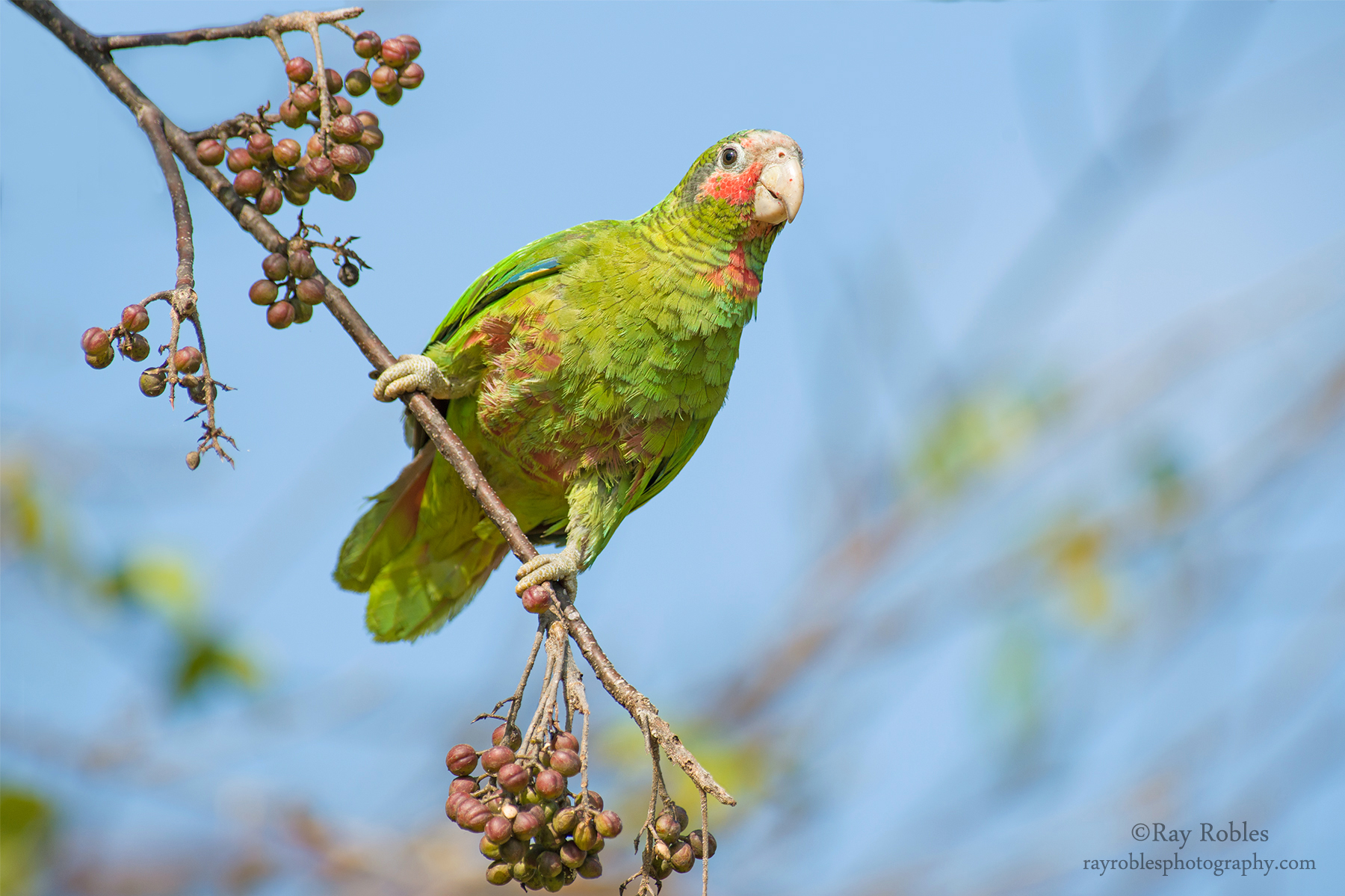
About 2,000 parrots inhabit Grand Cayman, while the quieter, smaller Cayman Brac Parrot maintains a stable population of about 400. Nesting in tree holes in old-growth forests, the colourful parrots depend on undisturbed woodlands and black mangrove forests for survival.
The Cayman Islands parrots are two sub-species of the Cuban Parrot (Amazona Leucocephala). Cayman's parrots have iridescent green feathers with darker edges over the body, a white eye ring, red cheeks, black ear patches and brilliant blue wing feathers which are only obvious when the bird is in flight. The tail has blue outer edges, with some red and yellowish-green underneath.
The Grand Cayman Parrot (Amazona leucocephala caymanensis) also has a pink flush to its whitish forehead. The Cayman Brac Parrot (Amazona leucocephala hesterna) is slightly smaller, with more black trim on its green feathers. The crown is pure white, and there is a large maroon area on the abdomen. It is now found only on Cayman Brac. Although it used to inhabit Little Cayman, it was apparently wiped out from there by the 1932 hurricane.
Historically parrots were common family pets. Today, however, it is illegal to take a parrot from the wild and keep it as a pet.
More:
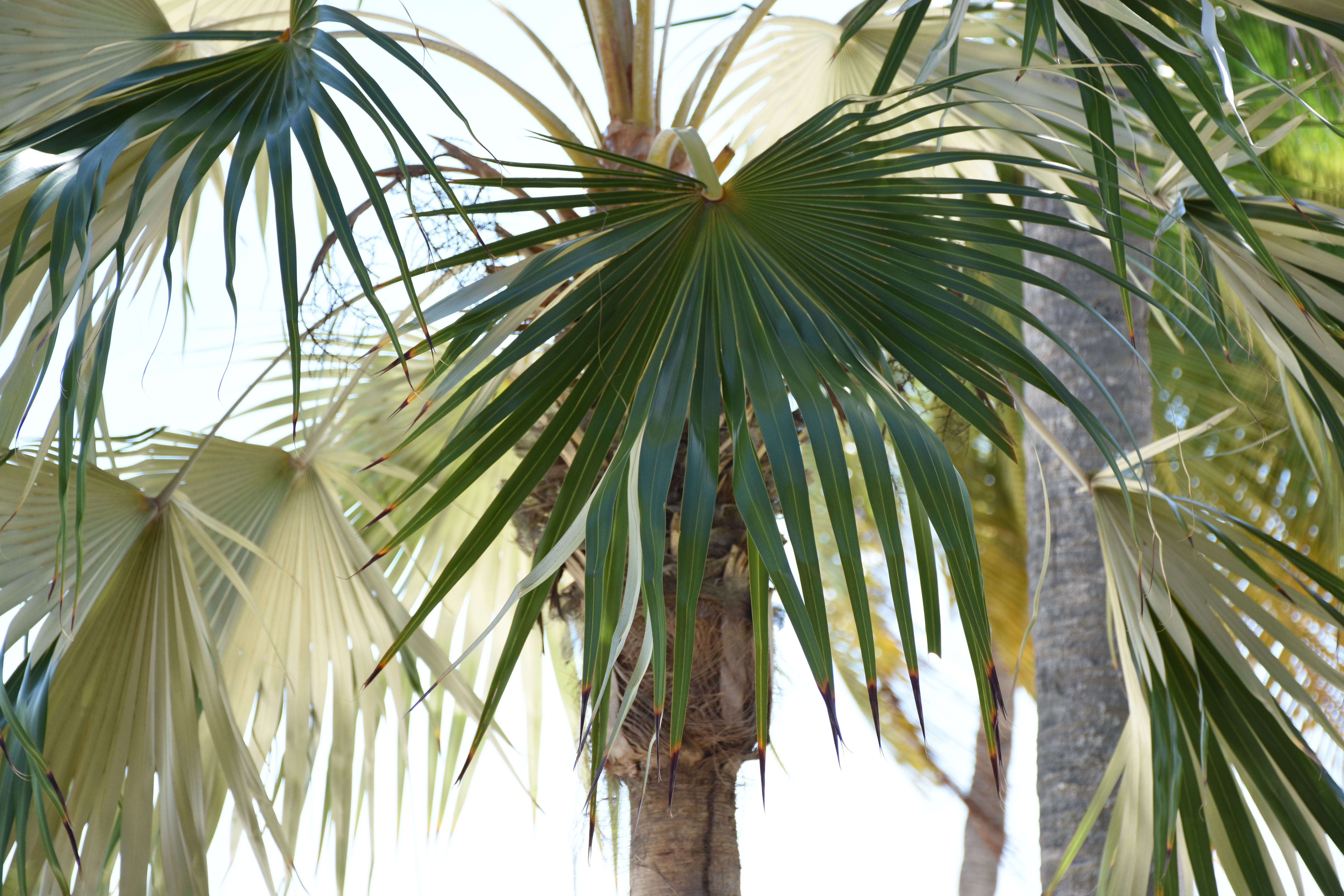
Tall, slender silver thatch palms are especially conspicuous at the eastern end of all three of the Cayman Islands, where they sway in the trade winds high above the low, dry thickets of native trees and shrubs. Bearing the scientific name Coccothrinax proctorii after botanist Dr. George Proctor, the leaves are what give this tree its common name; they're green on the top and silver on the bottom.
Up to the early 1960s, the silver thatch palm played an important role in the lives of Caymanians. Unusually tough, the leaves have a variety of uses, from roofing for houses to the weaving of hats, baskets and fans. In earlier years, straw rope made from the thatch palm was highly prized in Cuba and Jamaica for use in shipping, fishing and sugar industries. Exporting rope was Cayman's largest source of revenue.
More:
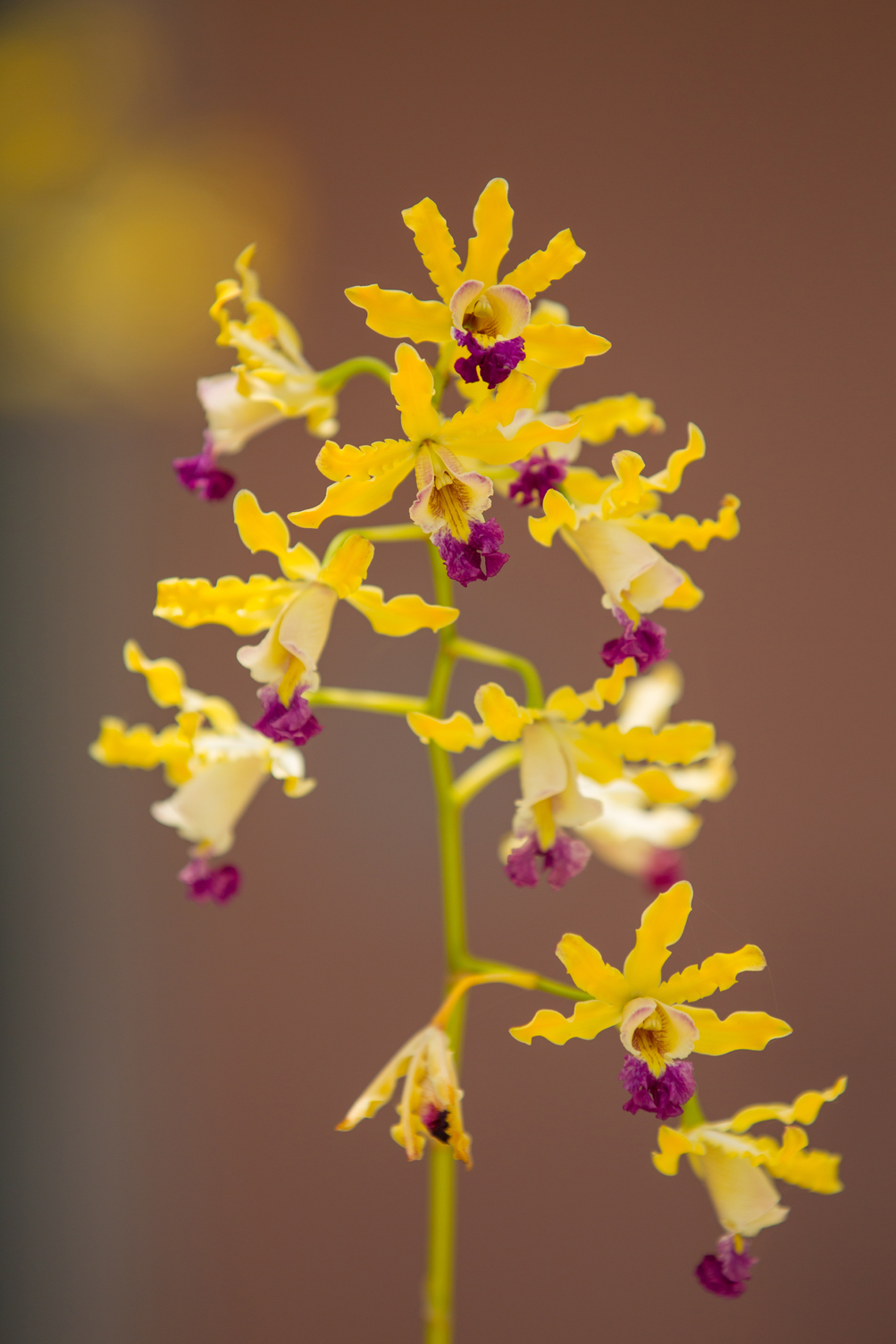
The woods provide shelter for several varieties of flowering plants, including orchids. Probably the best known of Cayman's 26 species of orchids is the wild banana orchid, of which there are two varieties: Schomburgkia thomsoniana var. thomsoniana, which originated on Grand Cayman, and Schomburgkia thomsoniana var. minor, which came from Cayman Brac and Little Cayman.
Both varieties have scented flowers with purple lips, although the petals are predominantly white on the Grand Cayman variety, while the Sister Islands' has slightly smaller flowers, with pale yellow petals. The flowers appear at the top of a long curved spike at the bottom of which cluster banana-like pseudo-bulbs that give this orchid its name.
More: